Atherium Project Organization
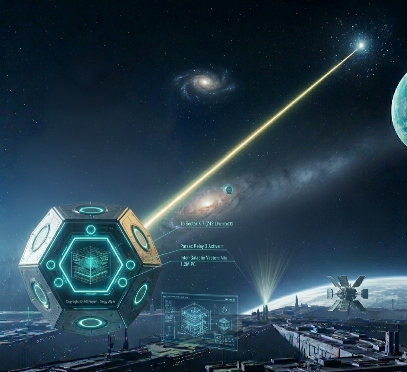
A passive interstellar handshake node — now entering collaborative development.
12 April — a day for long‑term thinking and future infrastructure.
1. Mission
Atherium is a long‑term scientific initiative exploring passive, ultra‑durable communication markers based on:
- material geometry
- metasurfaces
- cavity resonance
- holographic filtering
- sunlight‑based optical response
The goal: a universal, civilization‑agnostic handshake mechanism.
2. Why now
Humanity has sent messages into space for decades — Voyager, Arecibo, gold plates, radio pulses. Atherium proposes a different starting point:
A marker.
A node.
A point in space that says:
“We were here. Here begins a path.”
Atherium is designed as a possible first building block of an interstellar infrastructure that can outlive civilizations and remain interpretable across deep time.
Key resources
These resources provide context, narrative and technical framing for Atherium:
Public narrative
High‑level framing and intent of Atherium in an accessible, calm tone.
Concept & landing
Visual and conceptual overview of Atherium as a passive interstellar node.
Technical presentation
Slide‑based explanation of structure, signal path, protocol and scientific foundations.
3. Project structure
Atherium is organized into three collaborative tracks that connect research, industry and citizens around a shared long‑term experiment.
A) Research Track (Universities & Institutes)
Focus:
- metasurface design
- cavity resonance
- holographic filters
- optical response
- long‑term material stability
Partners:
- physics labs
- materials science groups
- photonics institutes
- space engineering departments
Deliverables:
- simulations
- prototypes
- measurement data
- peer‑reviewed research
B) Industry Track (Companies & Space Partners)
Focus:
- advanced materials
- precision manufacturing
- optical components
- space‑grade encapsulation
- deployment concepts (LEO, lunar, deep space)
Partners:
- aerospace companies
- materials manufacturers
- optical engineering firms
- launch providers
Deliverables:
- manufacturable designs
- production processes
- deployment feasibility studies
C) Citizen Track (Atherium Home Edition)
Focus:
- public participation
- small‑scale experiments
- smartphone‑triggered light responses
- community science
Participants receive:
- a miniaturized passive Atherium device
- experiment guidelines
- an upload portal for results
Deliverables:
- distributed data
- pattern‑response observations
- community‑driven insights
4. Participation model
Atherium uses a priority‑based participation system with limited slots per phase and transparent criteria. Selection is AI‑assisted and finalized by the project lead.
- limited slots per phase
- transparent criteria
- AI‑assisted evaluation
- final selection by project lead
Evaluation criteria:
- scientific relevance
- feasibility
- contribution potential
- alignment with long‑term mission
5. AI‑assisted project platform
A dedicated AI‑based platform coordinates the project across all tracks and phases.
Core functions
- application evaluation
- experiment analysis
- project phase management
- community moderation
- scientific suggestion engine
- cross‑track matching (Research ↔ Industry ↔ Citizen)
User experience
- clean, minimal interface
- dashboards for each track
- experiment upload and tracking
- scoring and prioritization system
- progress visualization across phases
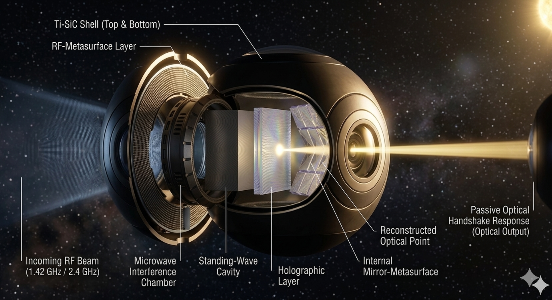
Illustration from the Atherium presentation: interstellar signal path and passive response chain.
6. Roadmap
Atherium is structured in phases, from concept and lab work to citizen participation and space deployment.
- passive resonance architecture
- holographic filter design
- optical response validation
- university onboarding
- simulation frameworks
- material testing
- manufacturable prototypes
- space‑grade encapsulation
- deployment studies
- Atherium Home Edition
- distributed experiments
- global participation
- LEO test
- lunar surface test
- deep‑space marker
7. Contact
For collaboration inquiries (space agencies, research institutes, industry, and citizen science initiatives):
Email:
sergy@alpins.de
Lead: Sergy Alpin · AI Business Lead & Research